
Web Monitoring for Business Signals
The public web is one of the broadest sources for tracking business signals, company updates, market activity, and online mentions. Important information can appear across many different places: company websites, blogs, press pages, product pages, documentation, directories, news articles, and other publicly available webpages.
AlertBrew helps turn this scattered web activity into focused alerts. Instead of manually checking websites or searching online, you can describe what kind of web update matters to you. AlertBrew then analyzes relevant public web information and notifies you when it finds something that matches your request.
What AlertBrew Can Track on the Web
AlertBrew can help monitor publicly available web content related to companies, products, competitors, markets, industries, and topics.
For example, it can help you notice when a competitor launches a new product, changes pricing, publishes a new case study, announces a partnership, updates documentation, or gets mentioned in an article.
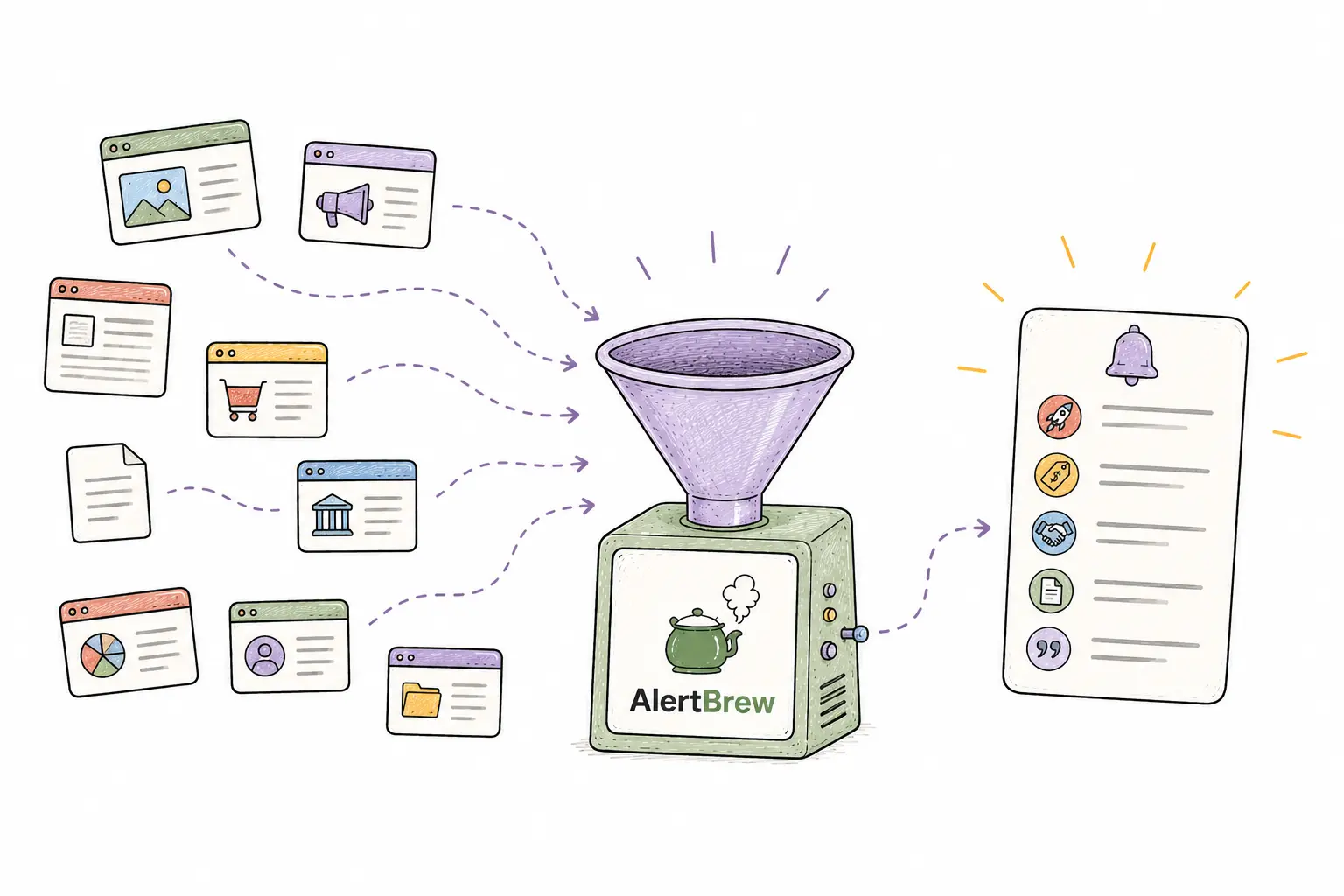
This is useful because many important updates do not arrive through one official channel. A company may quietly update a landing page, publish a changelog, change its pricing copy, add a new integration, or appear in a niche industry publication before the update becomes widely known.
How to Use Web Monitoring
To use web monitoring effectively, start by deciding what kind of public information you want to catch.
For competitor monitoring, you might ask AlertBrew to watch for product launches, pricing changes, new partnerships, acquisitions, funding announcements, hiring signals, customer stories, or positioning changes.
For brand monitoring, you might monitor public mentions of your company, product, executives, or category.
For product research, you might track competitor feature updates, documentation changes, new integrations, release notes, or changes in messaging.
For market research, you might monitor trends, regulation, customer demand, analyst commentary, vendor activity, or industry news.
For sales intelligence, you might watch for company expansion, new initiatives, technology adoption, leadership changes, funding news, or signals that a company may be ready to buy.
The key is to describe the signal clearly. Instead of asking for “web updates,” it is better to define the exact type of information that should trigger an alert.
.webp?alt=media&token=2ed6c1d9-53e9-48f5-a75e-9a537a3993de)
Common Web Monitoring Use Cases
Web monitoring can support many business workflows.
A product team can use it to track competitor features, release notes, integrations, documentation changes, and product positioning.
A marketing team can use it to monitor brand mentions, competitor messaging, category trends, customer stories, and new content published by competitors.
A sales team can use it to identify buying signals such as funding, expansion, new initiatives, leadership changes, or public mentions of operational challenges.
A strategy team can use it to follow market movements, acquisitions, partnerships, regulatory changes, and emerging industry trends.
A technical team can use it to monitor public documentation, changelogs, API updates, deprecations, and integration changes.
How AlertBrew Turns Web Activity into Alerts
For example, if you want to know when competitors change their pricing or packaging, AlertBrew can look for signals such as updated pricing pages, new plan names, changed feature limits, new billing terms, or public announcements about pricing changes.
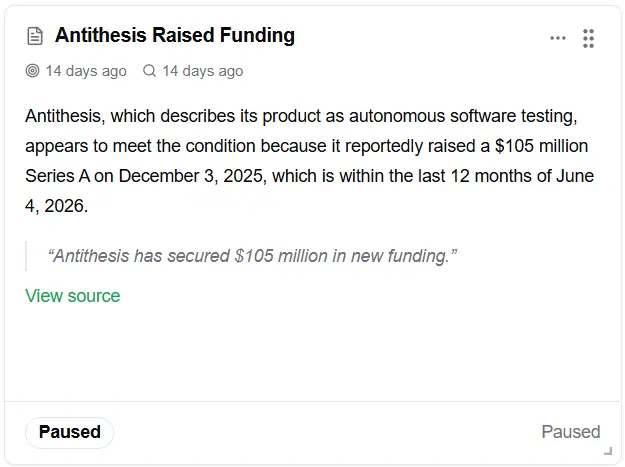
When a relevant signal is found, AlertBrew can summarize it in a clear format so you understand what happened and why it matters.
Why Web Monitoring Matters
The public web is where many business signals first become visible. Companies update pages, publish announcements, release documentation, appear in articles, and change their messaging constantly.
AlertBrew helps make those signals easier to use. It reduces manual research, filters out irrelevant information, and turns web activity into concise, actionable alerts.
With web monitoring, teams can stay informed about competitors, customers, markets, products, and public mentions without spending time manually searching the internet every day.