
Trustpilot Review Monitoring
Trustpilot is a valuable source for tracking customer feedback, public reputation, product perception, and service quality. People often use Trustpilot to leave reviews about their experience with a company, product, support team, pricing, delivery process, reliability, or overall satisfaction.
AlertBrew helps turn these reviews into focused alerts. Instead of manually checking Trustpilot pages, reading every new review, or waiting until negative feedback becomes a bigger issue, you can describe what kind of review activity matters to you. AlertBrew then analyzes relevant Trustpilot content and notifies you when it finds something that matches your request.
What AlertBrew Can Track on Trustpilot
AlertBrew can help monitor public customer reviews and reputation signals related to companies and products.
For example, it can help you notice when a company receives a negative review, when customers repeatedly mention the same issue, when support quality becomes a common complaint, or when users praise a specific feature or experience.
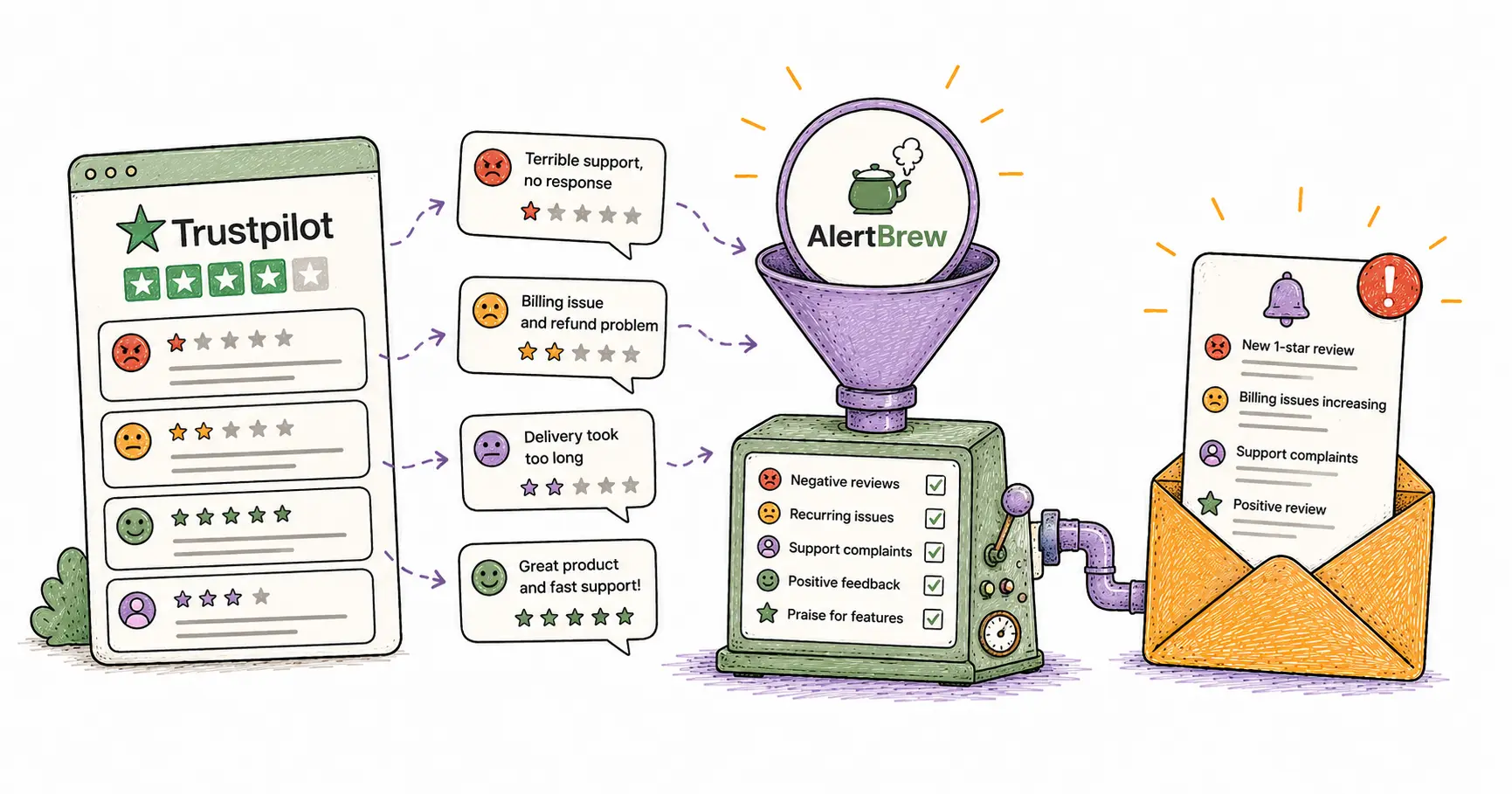
This is useful because Trustpilot reviews often contain direct customer language. Reviews can reveal what people value, what frustrates them, and what influences their perception of a brand.
How to Use Trustpilot Monitoring
To use Trustpilot monitoring effectively, start by deciding what kind of customer feedback you want to catch.
For reputation monitoring, you might ask AlertBrew to notify you when a company receives a low-rated review or when negative sentiment increases.
For customer experience monitoring, you might track reviews mentioning support delays, billing problems, product quality issues, delivery problems, refunds, cancellations, or onboarding difficulties.
For competitor monitoring, you might monitor competitor reviews to understand what customers like, dislike, or wish were better.
For product research, you might look for recurring complaints, feature requests, usability issues, or reasons customers switch from one company to another.
For marketing and sales intelligence, you might track positive review themes that show what customers value most, such as fast support, ease of use, reliability, transparent pricing, or strong onboarding.
The key is to describe the signal clearly. Instead of asking for “Trustpilot updates,” it is better to define the exact kind of review that should trigger an alert.
.webp?alt=media&token=d186c90d-eb22-4e12-aa51-ee7c46d3e197)
Common Trustpilot Monitoring Use Cases
Trustpilot monitoring can support several business workflows.
A customer support team can use it to catch negative reviews quickly and respond before the issue damages customer trust.
A product team can use it to identify recurring complaints, usability problems, missing features, and reasons customers feel disappointed.
A marketing team can use it to understand which positive themes customers repeat most often and use those insights for messaging, testimonials, and positioning.
A sales team can use it to monitor competitor weaknesses, such as complaints about pricing, support, reliability, or contract terms.
A leadership team can use it to track brand reputation, customer sentiment, and changes in public perception over time.
How AlertBrew Turns Trustpilot Reviews into Alerts
For example, if you want to know when customers complain about billing, AlertBrew can look for reviews mentioning unexpected charges, refund problems, cancellation issues, subscription confusion, or pricing dissatisfaction.
When a relevant signal is found, AlertBrew can summarize it in a clear format so you understand what happened and why it matters.
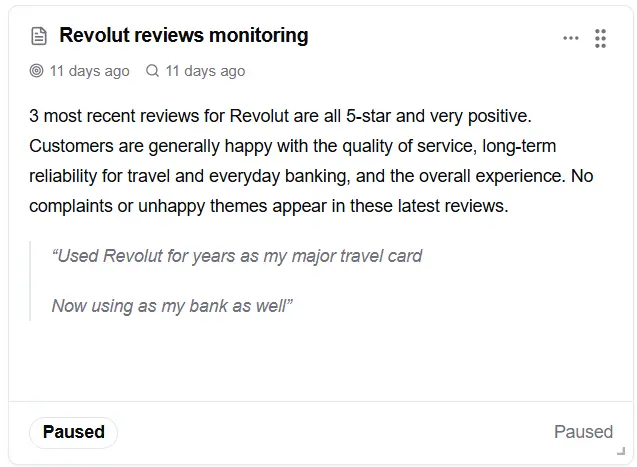
Why Trustpilot Monitoring Matters
Trustpilot is important because it reflects public customer perception. Reviews can influence buying decisions, reveal service problems, and show how customers compare companies in the market.
AlertBrew helps make this feedback easier to use. It reduces manual review checking, filters for the feedback that matters most, and turns Trustpilot activity into concise, actionable alerts.
With Trustpilot monitoring, teams can stay informed about customer satisfaction, reputation risks, competitor weaknesses, and positive customer themes without manually reading reviews every day.