
App Store and Google Play Review Monitoring
App Store and Google Play are valuable sources for tracking mobile app reputation, customer feedback, product quality, and competitor perception. Users often leave reviews about bugs, performance issues, missing features, pricing, subscriptions, onboarding, support, and overall app experience.
AlertBrew helps turn this feedback into focused alerts. Instead of manually checking app pages, reading every new review, or comparing competitor apps one by one, you can describe what kind of app store activity matters to you. AlertBrew then analyzes relevant public reviews and app-related signals and notifies you when it finds something that matches your request.
What AlertBrew Can Track in App Stores
AlertBrew can help monitor public feedback and reputation signals from App Store and Google Play.
For example, it can help you notice when users complain about crashes after an update, mention login problems, report payment or subscription issues, request a missing feature, or praise a specific part of the app experience.
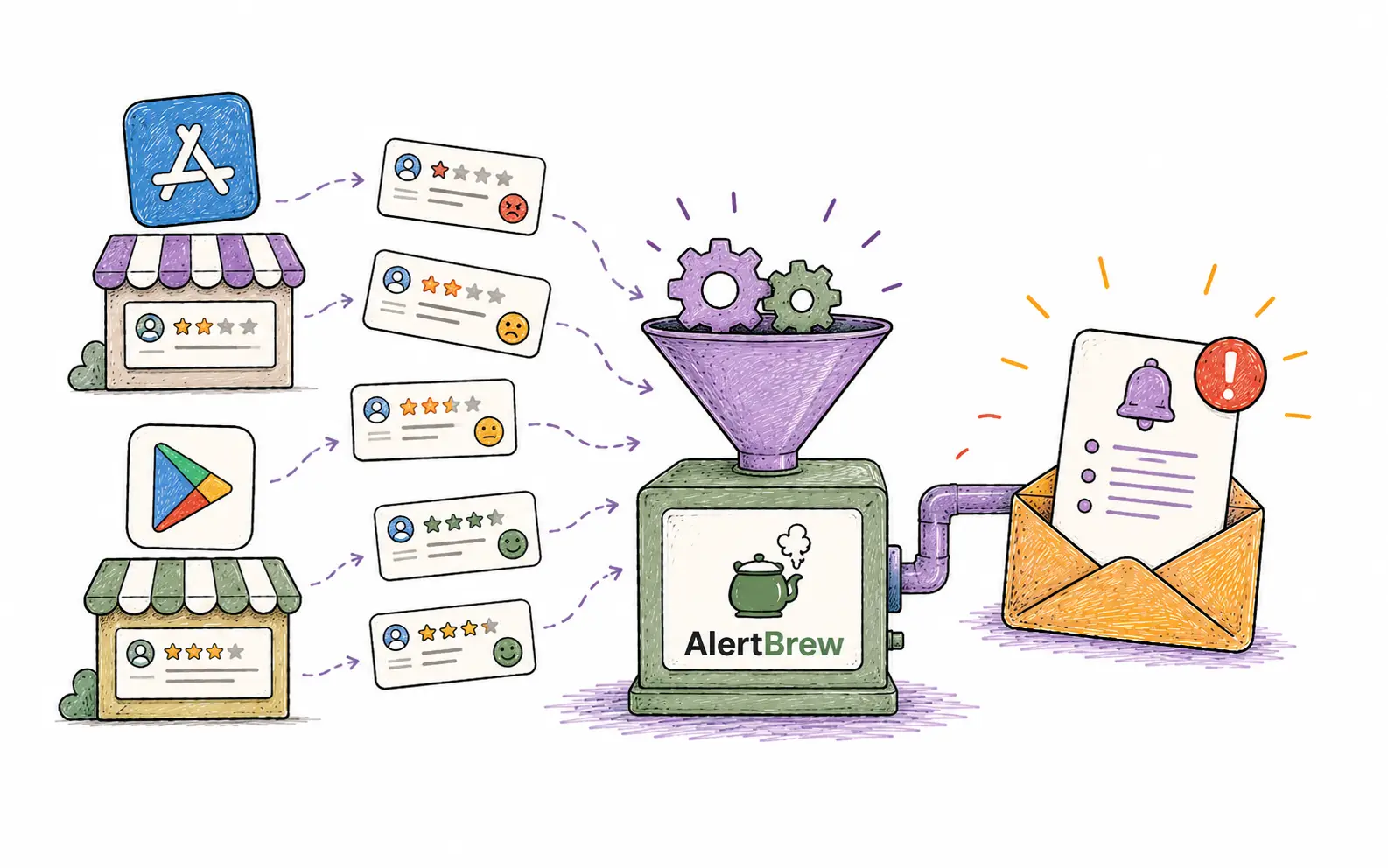
This is useful because app store reviews often reflect real user experience at the moment something goes wrong or works especially well. They can reveal technical problems, usability issues, customer frustration, and feature demand very quickly.
How to Use App Store and Google Play Monitoring
To use app store monitoring effectively, start by deciding what kind of user feedback you want to catch.
For reputation monitoring, you might ask AlertBrew to notify you when an app receives a negative review, a sudden complaint pattern, or feedback mentioning a serious issue.
For product monitoring, you might track reviews about bugs, crashes, slow performance, confusing UX, missing features, login issues, notification problems, or onboarding friction.
For competitor monitoring, you might monitor competitor app reviews to understand what users like, dislike, or want improved.
For growth and marketing insights, you might track positive reviews that mention ease of use, reliability, design, speed, customer support, value for money, or favorite features.
The key is to describe the signal clearly. Instead of asking for “app reviews,” it is better to define the exact kind of review that should trigger an alert.
.webp?alt=media&token=67f5ccfd-363d-4eba-a80c-2f7062045614)
Common App Store and Google Play Monitoring Use Cases
App store monitoring can support several business workflows.
A product team can use it to identify feature requests, usability problems, onboarding friction, and recurring complaints about the app experience.
An engineering team can use it to catch bug reports, crash complaints, performance issues, broken notifications, login failures, or problems after a new release.
A customer support team can use it to spot urgent complaints related to payments, subscriptions, account access, refunds, or unresolved support cases.
A marketing team can use it to understand what users value most and turn repeated positive themes into messaging, testimonials, and app store optimization ideas.
A competitor research team can use it to monitor competing apps and identify weaknesses, strengths, and opportunities based on real user feedback.
How AlertBrew Turns App Reviews into Alerts
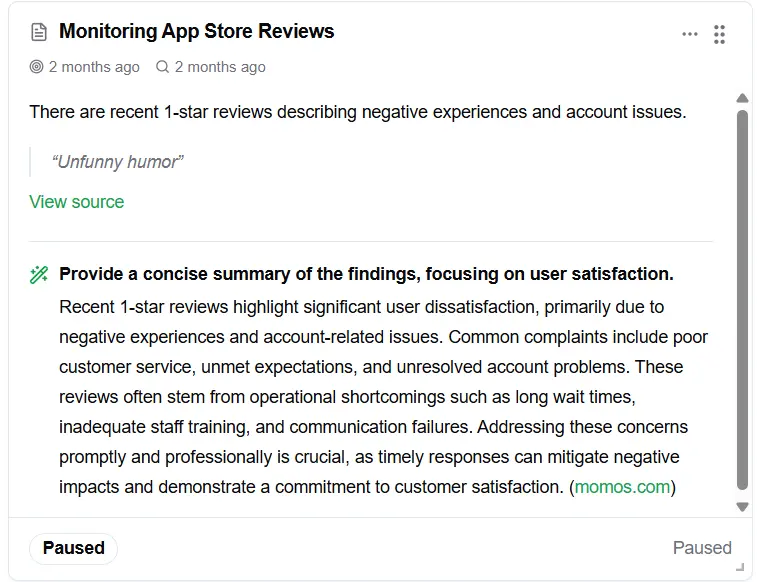
For example, if you want to know when users report technical problems after an update, AlertBrew can look for reviews mentioning crashes, freezing, bugs, broken features, login failures, slow loading, or notification issues.
When a relevant signal is found, AlertBrew can summarize it in a clear format so you understand what happened and why it matters.
Why App Store and Google Play Monitoring Matters
App Store and Google Play reviews directly influence user trust, conversion, retention, and product perception. A few repeated complaints can point to a real product issue, while positive reviews can reveal what users value most.
AlertBrew helps make this feedback easier to use. It reduces manual review checking, filters for the signals that matter most, and turns app store activity into concise, actionable alerts.
With App Store and Google Play monitoring, teams can stay informed about bugs, customer frustration, feature demand, competitor weaknesses, and positive user feedback without manually reading reviews every day.