
How to Create Your First Alert

This guide will walk you through the simple process of setting up your first alert in AlertBrew. In just a few steps, you can start monitoring the web for signals that matter to you.
1. Navigate to Your Destination
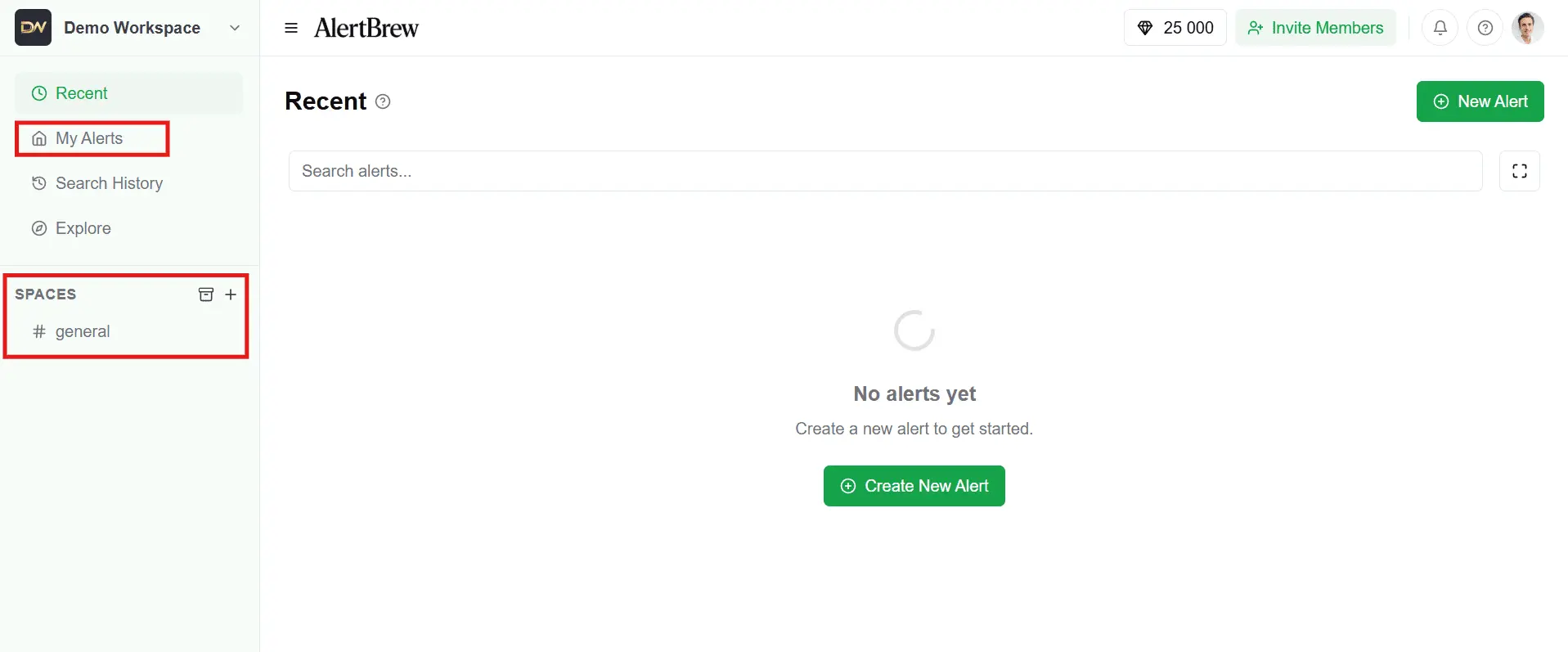
First, decide where you want this alert to live. You can create it in your private My Alerts area or in a shared Space. Click on the desired location in the sidebar.
2. Click "New Alert"
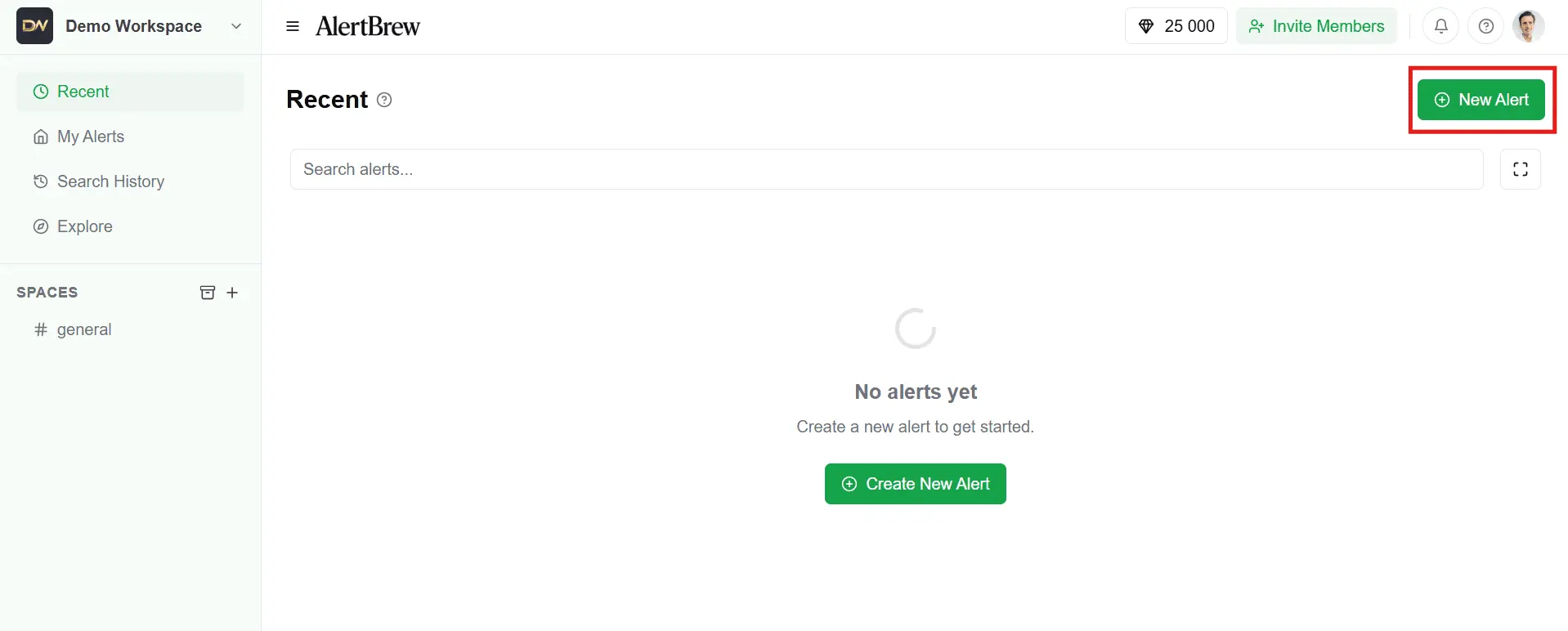
In the top-right corner of the main content area, you'll find the "New Alert" button. Click it to open the alert creation form.
3. Name Your Alert
Give your alert a descriptive name that helps you quickly understand what it's monitoring.
Example: "New AI Startups Mentioning 'Seed Funding'"

4. Write Your Alert Condition
This is the core of your alert. In plain language, describe exactly what you want to find. Be as specific as possible for the best results.
Example: "A new AI startup has announced seed funding in the last 7 days."

5. Configure the Search
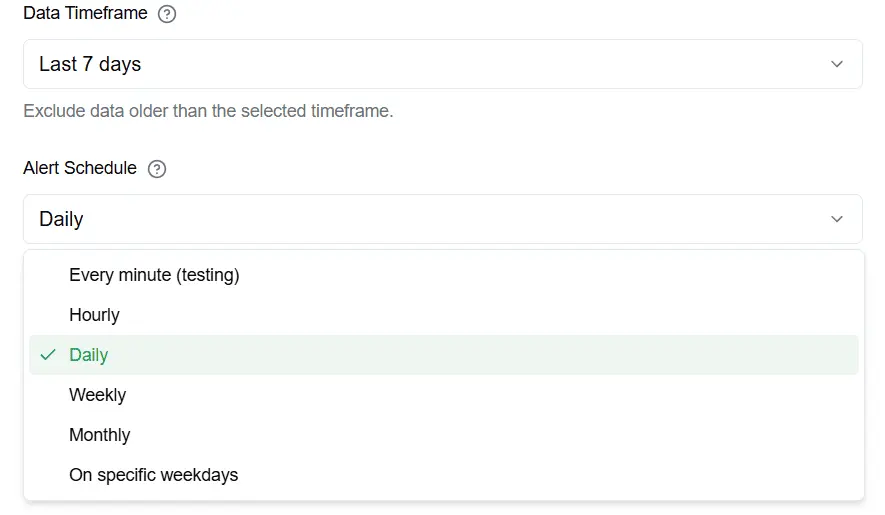
Search Timeframe: Choose how far back the AI should look for information. For news-related alerts, "Last 7 days" is usually best.
Schedule: Select how often you want the AI to perform the search (e.g., daily, weekly).
6. Add Custom Insights (Optional)
You can ask the AI to extract specific information when a match is found. Click "Add Report Section" and enter a clear question. This is useful for pulling out key data points like names, locations, or investment amounts.
Example: "What is the name of the lead investor?"

7. Choose Notification Recipients
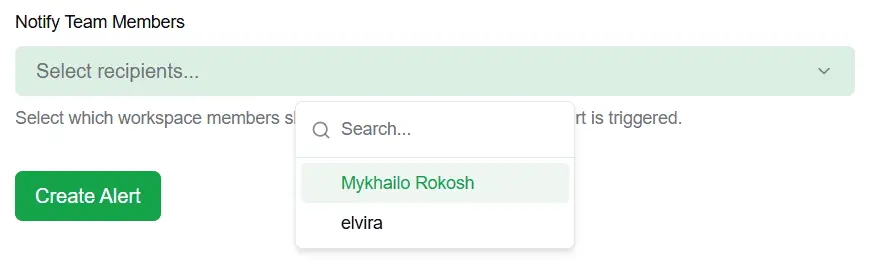
Select which workspace members should receive an email notification when this alert is triggered.
8. Create and Activate
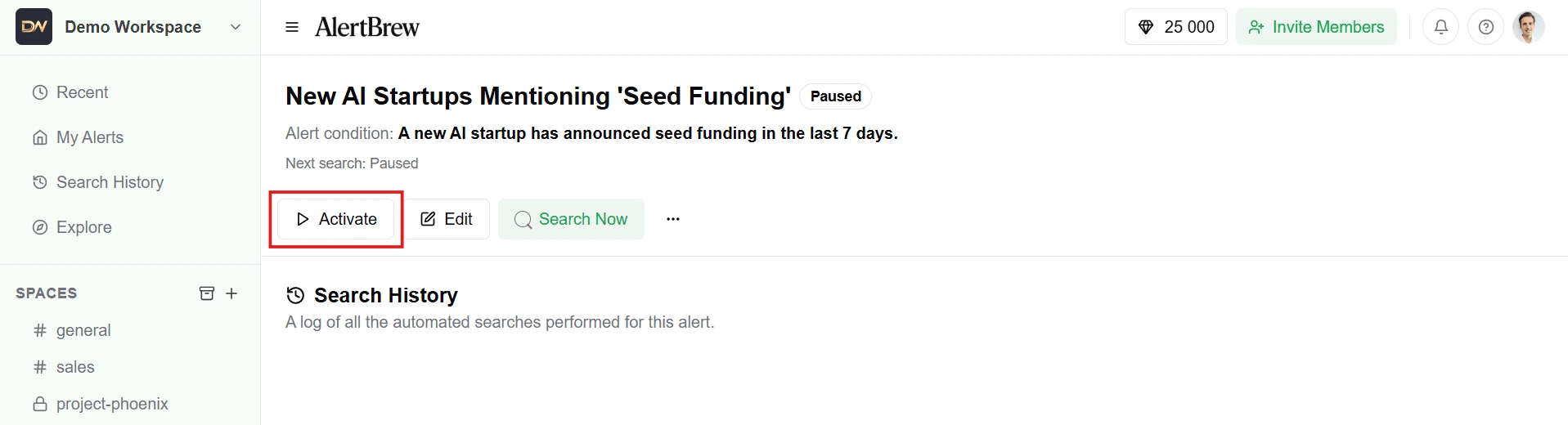
Click the "Create Alert" button. Your new alert will appear on your dashboard, paused by default. To start monitoring, click the Activate button on the alert card.
Note: It's often a good practice to start with a broader condition and then make it more specific if you get too many irrelevant results. It's easier to narrow down than to start too narrow and miss potential matches.